Waterline Environmental

Waterline is the recommended Environmental Contractor as seen on Holmes on Holmes!

  • About
  • Industrial Tank Removal
    • Diesel Generator Fuel Systems
    • Above Ground Liquid Storage
  • Residential Tank Removal
    • Soil Remediation
    • Foundation Underpinning
  • FAQs
  • Blog
  • Contact

March 19, 2023 by Waterline Environmental

How Do I Know If My Underground Oil Tank Is Leaking? 4 Ways to Spot a Leak

Having an underground oil tank on your property was once commonplace for residential homes, but now that they’ve been deemed inefficient, costly to upkeep, and dangerous to the environment, many homeowners have since called in experts like the team at Waterline Environmental for safe underground oil tank removal. 

But what if you still have one on your property? How do you know if you’ve got an oil tank leak? Well, here are four ways to spot a leak.

Contact Waterline Environmental

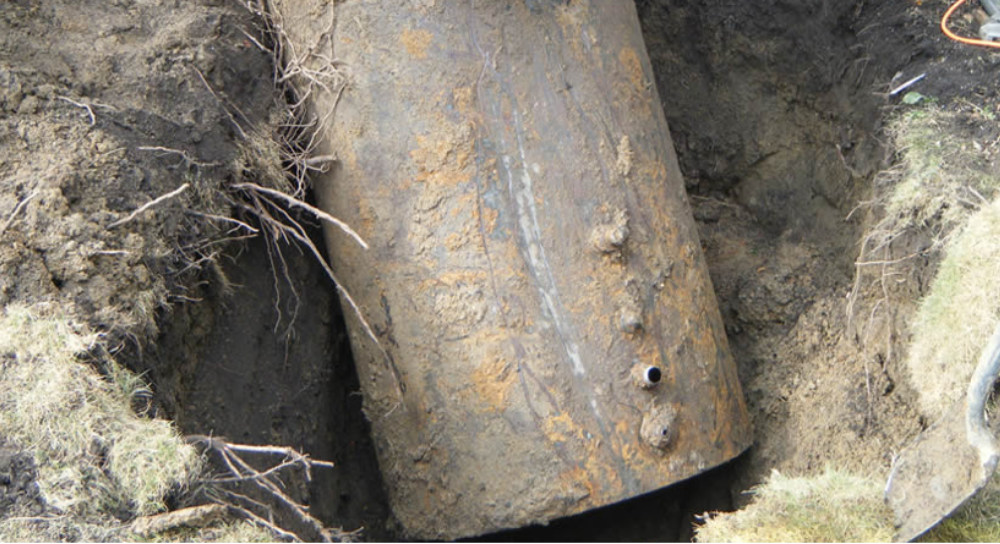
Dug up oil tank sitting vertically with a large hole visible on the top.

1. An increasing heating bill.

Knowing your underground oil tank has sprung a leak can be tough to tell at first. While many things can cause an oil tank to leak, it won’t be something dramatic that tips you off; instead, it will become evident over time. One of the first things you’ll start to notice is that your heating bill will increase.

If you use your underground oil tank as your heating fuel source, then you will have some idea of what your consumption (and the cost!) should look like throughout the year, but if your oil tank is leaking, the amount will be higher than usual. This is especially true in the summer months when you don’t typically require additional heating. Try comparing your heating bill over a few months to see if something is amiss that requires either repair or oil tank removal.

2. Dying vegetation.

When an underground oil tank leaks, toxic materials seep into the ground and soil around it, poisoning anything that would normally grow. If you are noticing dead vegetation in the area around the location of your underground oil tank, that’s sure sign your oil tank is leaking, and you need to act fast.

Leaking oil tanks pose a significant risk to your and your neighbour’s property, the local environment and the nearby water supply, too. So, don’t hesitate to call in an experienced team like the professionals at Waterline Environmental to carry out an oil tank removal.

3. Oily or bad-tasting water.

As you can tell, when an underground oil tank starts leaking, it affects almost everything in its immediate surroundings, including water. Whether it’s the groundwater on your property or the water from your tap, your water can signal that your oil tank is leaking.

Walk around your property and check the groundwater, if you notice there’s an oily sheen to it and a bad odour, then chances are you’ve got a leak that will make oil tank removal all the more necessary. When it comes to the water coming from your taps, if you’re on well water and the leak reaches it, you will see, taste and smell it coming through the taps.

4. Foul-smelling, dark-coloured patches on your property.

Another way to tell if there’s an underground oil tank leak is to walk around your property and check for dark stains or patches. These dark patches will often emit a foul odour and will be greasy as well, tipping you off there’s likely an oil tank leaking underground that will need to be removed.

It’s important to note that if your underground oil tank has substantially leaked into the surrounding environment, you will likely need soil remediation and possibly foundation underpinning completed after the oil tank’s removal.

Is your oil tank leaking? Call the experts at Waterline Environmental to schedule an evaluation and oil tank removal!

Knowing if there’s an oil tank leaking on your property is important if you want to protect your property value and the environment around your home. If there is a leak, you’ll need to promptly schedule an oil tank removal with a licensed and reputable company like Waterline Environmental.

Contact us today by calling 905-876-8298 to learn more about how we can help! Or fill out our form.

Contact Waterline Environmental

President: S.A. (Stu) Ferguson

Email: waterline1943@gmail.com

Direct: 905-876-8298

Office: 855-333-6604

Filed Under: Uncategorized

March 19, 2023 by Waterline Environmental

How a Residential Underground Oil Tank Affects the Value of Your Home

Residential underground oil tanks were common in properties across Ontario in the past. Used to store the fuel that would help heat homes, what was once a boon to residential neighbourhoods across the country is now a liability, especially if you plan on selling your house.

Due to their environmental risks and the onset of natural gas as a cleaner, safer fuel source, the province of Ontario mandated that, as of October 1, 2001, all steel underground oil tanks older than 25 years be removed from properties. If that’s not reason enough to invest in removal, then maybe knowing how they can cause your property value to tank will be. Here’s how a residential underground oil tank can affect the value of your home.

Learn more about residential oil tank removal.

Front view of a two-floor, brick-and-siding suburban home with trees behind it and a small SOLD sign on the front lawn.

What is an underground oil tank?

Considering the large impact having an underground oil tank can have, let’s learn a bit more about the costly beast that beds beneath your property.

As previously mentioned, up until recently, underground oil tanks have been the standard for many residential properties for the last 70 years. The oil held inside was the fuel used to heat homes, which comes in handy in chilly Canadian winters.

Made of steel and able to hold between 275 to 1,000 gallons of fuel, these tanks would typically have a lifespan of roughly 20 years before they would start to break down and leak due to rust and corrosion. And therein lies the issue. Leaking even small amounts of oil into the local environment presents big problems, such as contamination of the surrounding soil and groundwater.

Luckily, natural gas proved to be safer for the environment and cheaper for homeowners, which is why it’s now the standard for heating homes.

Discover more about underground oil tanks and why it’s on your property.

How a residential underground oil tank affects your property value?

Considering the amount of damage an old underground oil tank can do to the environment around your home, it’s no surprise it can have serious negative effects on the value of your property.

That’s bad news for homeowners and anyone looking to sell. Here’s why…

Underground oil tanks leak.

Even though an underground oil tank is made of strong steel, various factors, such as weather and the oil inside the tank, can cause a leak. Because underground oil tanks are no longer a common part of residential infrastructure, any that remain are likely past their prime, not maintained and prone to leaks.

Even worse, some homeowners may not even know they have an underground oil tank or one that’s sprung a leak. This means harmful oil could have been seeping into the surrounding area for quite some time, which can affect the health of the homeowner and the surrounding environment. It can also translate into higher insurance fees because most standard home insurance won’t cover the cost of oil leaks.

How to spot a leak.

Of course, if you have an underground oil tank, especially one that’s leaking, your property value will take a hit, meaning you won’t be able to sell at a higher price until it’s addressed. Suffice it to say; you’ll have to foot the bill for its removal and remediation, costs that any potential buyers definitely do not want to take on themselves.

The added costs.

Having an underground oil tank on your property not only poses threats to the environment but also to your bottom line. While you may want to sell your home for a highly profitable price, the added costs of dealing with an underground oil tank will quickly turn off anyone thinking of buying your property. Meaning your property value won’t be as high as it could be. So, let’s talk costs.

Location and removal.

Finding and removing an underground oil tank is no small task and requires certified professionals like the team at Waterline Environmental to get the job done right. Potential buyers will want confirmation whether there is or isn’t an underground oil tank located on the property. If there is, they will want further assurance that the costs of locating and removing the tank are covered by the homeowner before going forward with closing the deal.

Waterline’s underground oil tank removal process.

Remediation.

There’s more to dealing with an underground oil tank than just the costs of locating and removing the tank. If it’s been leaking into the soil, it will need to be remediated. Once the tank is removed, the soil will be tested for contaminants, and if it exceeds the Ministry of the Environment’s limits, it will need to be removed and treated.

Again, this will be a cost potential buyers will want covered by the homeowner, so it’s best to invest the money ahead of time to protect your property value.

Find out more about the soil remediation process.

Foundation underpinning.

If an underground oil tank has leaked into the soil near a home’s foundation, that soil will need to be removed, compromising the support of the foundation it previously sat under. That’s why foundation underpinning is an important and necessary added step. This process ultimately stabilizes the structure itself or the soil it rests upon. Similar to the other costs mentioned above, homeowners will be expected to take this on before going through with the sale of their home.

How Waterline does foundation underpinning.

While all these additional spends aren’t something most homeowners want to pay, they are necessary to maintain your home’s value and are a worthy investment.

Offputting to prospective buyers.

Considering the price tag that comes along with removing an underground oil tank, it’s no surprise that a property that still has one will drive away potential buyers, quashing any chance of a good sale.

For the many reasons detailed above, buyers will not want to take on the costs of removing an underground oil tank, at least not without knowing or without a substantial reduction in the asking price. That’s why it’s best for homeowners to address the location, removal and remediation of the tank ahead of time: not only does it prevent a hit to your property value, but it also protects you from potential legal headaches after the sale of your home.

Can you buy or sell a home with an underground oil tank?

While you can buy or sell a home with an underground oil tank, its existence should be disclosed to the buying party. Of course, this can result in the loss of the sale, which is why it’s recommended that homeowners remove the tank before the home is even listed on the market. Real estate agents should recommend this as well since it protects the value of the home and increases the chances of a good sale.

Protect your property value by calling Waterline Environmental for your residential underground oil tank removal and remediation!

While it can come off as a costly and inconvenient headache, removing a residential underground oil tank doesn’t have to be when you work with the experienced and licensed team at Waterline Environmental. We ensure the location, removal and remediation process is done right so that you or any new owners can enjoy the home for what it’s truly worth!

Contact us by calling 905-876-8298 or by filling out our form.

Contact Waterline Environmental


President: S.A. (Stu) Ferguson

Email: waterline1943@gmail.com

Direct: 905-876-8298

Office: 855-333-6604

Fax: 519-856-2149

Filed Under: Uncategorized

February 15, 2022 by Waterline Environmental

5 Reasons Why You Need A Commercial Oil Tank Removal

Commercial oil tanks once provided a method for heat and transferring energy into buildings. With the emergence of more effective and efficient methods to achieve this, commercial oil tanks began to lose their purpose. 

Rather, it has become critical and highly recommended to remove your commercial oil tank. Waterline Environmental has compiled a list of 5 reasons why you need a commercial oil tank removal.

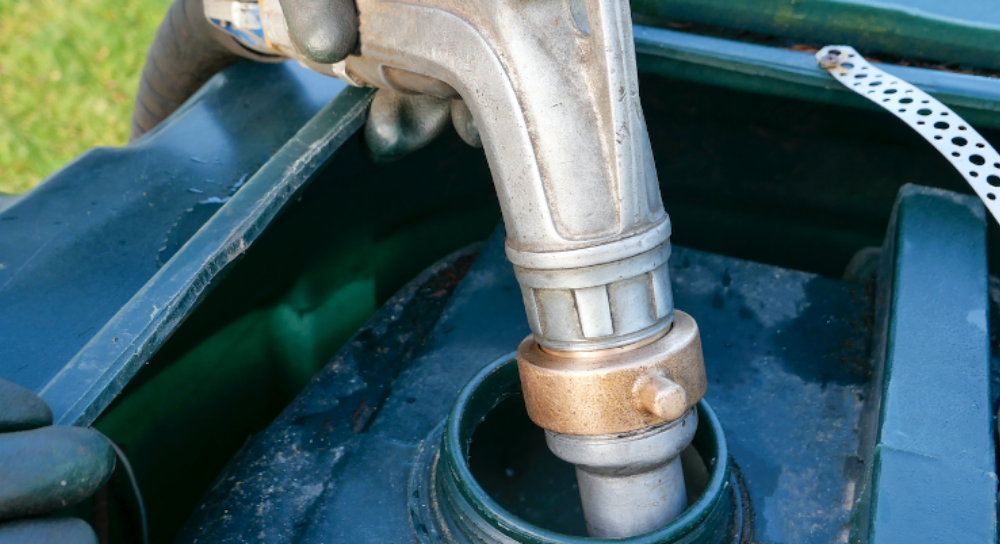
New commercial oil tank

1. Save on costs by removing your commercial oil tank

As mentioned above, newer and more energy-efficient systems are now available, removing the need for commercial oil tanks. By choosing to carry on using an oil tank, you face high maintenance costs in addition to the expensive fuel required to operate the oil tank. 

Moreover, once an oil tank has been detected on your commercial property, removing it immediately and prior to any further damages can help save costs. Removing an oil tank may feel expensive upfront, but a leaked or damaged tank will be a lot more costly in the long run due to remediation and complications.

2. Complying with city bylaws

In addition to underground oil tanks being costly, it is also against your provincial and city regulations to keep an unused one. 

Ontario regulations require you remove unused underground storage tanks as outlined by the Technical Standards & Safety Authority Act (TSSA).

3. Health and safety

Keeping an underground oil tank on your property can potentially impact the environment, which, in turn, can affect the individuals on the property and the surrounding area. 

If the oil tank begins to erode or leak, this will harm the environment around the tank. The oil can quickly begin to contaminate the soil, water, and air as a result. Additionally, as previously mentioned, the contamination will substantially increase the cost of removal as it will require soil remediation.

4. Property value increases

When it comes time to say goodbye to your property and put it up for sale, the underground oil tank may make that process more difficult. While you might have managed to keep the underground oil tank, more and more potential buyers refuse to purchase properties with them. 

It becomes a financial burden for future buyers and may bring down your property value by hundreds of thousands of dollars. Moreover, if there was a neglected leakage, as the seller you may get in trouble for negligence.

5. Preparing for renovation

Lastly, an underground oil tank may interrupt your plans for renovating your property. One issue is that the underground oil tank could hinder the construction work. Another, even larger, issue is that an underground oil tank can leak as far as to your building, effecting the price of the current work or ruining any renovation you may conduct. 

Whether an issue arises before, during or after, an underground oil tank can cause some serious harm. It is important to remain proactive with your oil tank whether you want to keep it, inspect and maintain it regularly, or have it removed.

 Why choose Waterline Environmental?

Waterline Environmental is Technical Standards & Safety Authority (TSSA), PM2, and PM3 licensed. We provide quality and reliable commercial oil tank removal to ensure your satisfaction and safety. 

Contact us by reaching out at 905-876-8298 or fill out our form. 

Filed Under: Uncategorized

February 15, 2022 by Waterline Environmental

What Real Estate Agents Need to Know About Underground Oil Tanks

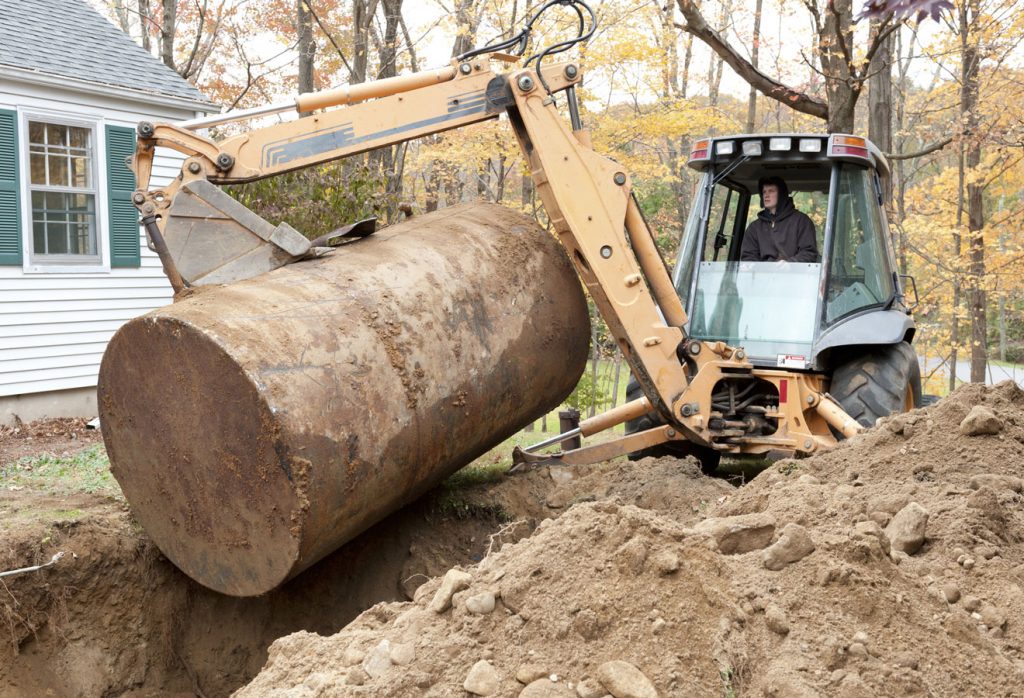
As a real estate agent, if you are looking to sell a property that has an underground storage tank or underground oil tank, it must be removed by a licensed company. Ignoring a home with an old underground oil tank can negatively impact your sale or your buyer’s satisfaction.  It is important to be proactive and determine whether or not an underground storage tank exists and being transparent with the seller and buyers on the situation. Failure to do so can result in many issues including ultimately losing the sale. Waterline Environmental has compiled a list of factors that impact a real estate agent regarding underground oil tanks. Excavator removing an underground oil tank

Complying with the Technical Standard and Safety Authority (TSSA) Act 

As a real estate agent, it may not be critical to know the entire Technical Standard and Safety Authority Act but it is important to trust and consult with experts who do.  The main takeaway from the TSSA is the outline of the appropriate procedures that are required to be taken by homeowners regarding their underground oil tank. As a real estate agent, your buyer requires full disclosure on the existence of an underground oil tank.

Underground oil tanks can affect the value of your home sale

It is recommended that underground storage tanks are removed prior to listing the house and certainly before going closing the sale. If the buyer asks to have an underground storage tank removed before closing, the length of this process can be longer than desired due to potential spillage/contamination.  As a result, the seller may have to spend months and a large amount of money to cover the costs and the buyer may be forced to move in and carry on dealing with the oil tank removal process.  This may ultimately impact the value of your home sale as these cost complications can add up to hundreds of thousands of dollars. Not to mention, it is likely that the buyer may bow out of the purchase or be dissatisfied due to the financial cleanup.

Negative visual for potential homebuyers

Trying to sell a home with an underground storage tank has become increasingly challenging as home buyers are aware of the financial and mental exertion that comes with removing one.  It is recommended to take care of the oil tank removal prior to seeking potential buyers as this can become a negative visual. To increase your chances of selling (and at an attractive price), it is beneficial to have the oil tank removed immediately and the documentation to prove it.

Possible spills can result in remediation costs

It is a lot more costly to remove an underground storage tank after it has leaked or been abandoned than it is immediately upon uncovering. Leakage will likely result in soil contamination, increasing the level of damage done and remediation required.  It is important to get the underground oil tank inspected and removed immediately. An expert would be able to determine if soil remediation is required. Without removing soil contamination, this can negatively affect the environment and public health all while increasing the cost of cleanup.  

Having a partnership with an oil tank removal company you can trust

As a real estate agent, there is a relatively high likelihood of you coming across underground storage tanks that require removing. Similarly to earning the trust of your potential buyers, you should be able to trust your oil tank removal partner.  You want to work with the same oil tank removal company each time to ensure quality and reliable work is conducted every time. This will protect your sale and your customer’s satisfaction, as well as reduce the pressure and stress you may have.  Learn more about why you need an underground oil tank removal partner you can trust.

Contact Waterline Environmental Inc. for all your oil tank removal needs!

In addition to having a reputation of delivering comprehensive, stress-free services, Waterline Environmental is Technical Standards & Safety Authority (TSSA), PM2, and PM3 licensed. We are also environmentally insured and a member of the Ontario Petroleum Contractors Association (OPCA). Contact us today to learn more about why Waterline Environmental is your best choice for a residential oil tank removal partner. President: S.A. (Stu) Ferguson Email: waterline1943@gmail.com Direct: 905-876-8298 Office: 855-333-6604 Fax: 519-856-2149
Filed Under: Uncategorized

August 9, 2021 by Waterline Environmental

What You Need to Know About Oil Tank Regulations and Codes in Ontario

So, you just discovered there is an oil tank buried in your backyard. Now you may be wondering, what does this mean? Whether you just purchased your home or have lived in it for many years, the reality is that this newly discovered oil tank is your responsibility.  The thing about oil tanks is that they come with a carefully constructed list of regulations and codes governed by the Technical Standards and Safety Authority, often referred to as the TSSA. If not properly maintained and taken care of, oil tanks can cause serious environmental damage.  If you have never had to manage an oil tank in the past, this may all seem foreign to you. Before making any further decisions, ensure you are educated on fuel oil regulations and codes. Once you know this, you will be able to start the process of updating your oil tank to meet the current expectations. 

Oil TankYour Oil Tank Must Be Registered with the TSSA 

Before you are able to have your filled, inspected, maintained or removed, you must first confirm that it is registered. Each unit has a unique registration number, and if you are unsure whether your unit is registered or not, the TSSA will be able to confirm this information for you.  If it has been confirmed that your unit is not yet registered, you must contact the TSSA to register it. The process is quick and easy, and doesn’t cost anything. You can simply fill out the application form online.  Once your form is processed, you will receive a registration number from the TSSA. This number can then be provided to the fuel oil distributor to avoid uninterrupted fuel oil supply. 

Aboveground VS Underground 

Depending on your tank and location, there may be different regulations for your system. Firstly to avoid confusion, the TSSA has outlined the definition of both aboveground and underground tanks.  Aboveground Tank– “means a tank that is installed at or above grade level within a building or within a secondary containment, but does not include a tank that is in direct contact with backfill material”.  Free standing fuel oil tanks in basements that are not in direct contact with backfill material are considered, by the TSSA, as above ground tanks. Underground Tank– “means a buried tank or partially buried tank that is in direct contact with earth or backfill”.  The TSSA does not consider fuel oil tanks that are in basements to be underground tanks unless they are in direct contact with backfill material.  Now that you have identified which tank you own, be sure you keep in the loop with all the appropriate regulations for that unit. Underground systems have more strict guidelines within the TSSA, and it is important that you follow them.  

Your Underground Oil Tank is not Being Used Anymore

If your oil tank has not been used in two years or more, is located underground, and you have no intention of ever using it again, it must be removed as soon as you are able. This is not just a recommendation but rather, a regulation enforced by the TSSA. This was put into place to ensure that the amount of environmental damage from fuel oil leaks can be kept to a minimum.  Oftentimes, homeowners have no idea they have a tank hidden away underneath their home. If a leaking tank was left neglected for a number of years, the damage would be tremendous and difficult to repair. This is why the TSSA has expectations put in place to avoid as much damage as possible, and ensure that homeowners are being diligent with maintaining their tank. 

Oil TankUnderground Tank Removal Requirements

In addition to removal due to lack of use, you are also required to remove your tank if it is 25 years old or more as of October 2001. If you are unable to tell the age of your oil tank for any reason, you are expected to assume it has exceeded the removal age, and have it withdrawn from service and removed or replaced.  When it is time to arrange your oil tank removal, it must be removed by a TSSA registered fuel oil contractor with a Petroleum Equipment Mechanic license. Once the tank has been removed, the TSSA must be notified, and the property owner must have an Environmental Assessment Report completed by a professional. If a leak of fuel oil is confirmed during this process, then the Spill Action Center of the Ministry of Environment must be notified.  Waterline Environmental is TSSA, PM2 and PM3 licensed as well as environmentally insured as a member of the Ontario Petroleum Contractors’ Association. As experts in our field, we are equipped to assist our clients from the beginning to the end of the process from quoting, to removal, as well as soil remediation afterwards. Our goal is always to ensure that our clients are in compliance with all TSSA regulations from our first discussion to our last visit.   

Oil Tank Maintenance 

In effort to ensure that you meet all the requirements set out by the TSSA, you are also expected to have your oil tank professionally maintained annually. This maintenance should be in accordance with the manufacturer’s instructions, to guarantee your specific unit is properly cared for. This yearly inspection focuses on the function of the oil tank, and the assurance that it is performing correctly.  In addition to annual maintenance, you must also complete a more comprehensive inspection every ten years. This inspection focuses more on ensuring that the oil tank meets all the TSSA code and regulations. 

Oil TankContact the Waterline Environmental Team

While assuming responsibility over a fuel oil tank may seem like an overwhelming process, there are a few key points to keep in mind. Ensuring your tank is registered, annually maintained, and removed if required based on TSSA guidelines.  Should you require a removal or soil remediation, contact our team at Waterline Environmental. We are Canadian owned and operated, and take great pride on our workmanship, believing in a hands-on approach. Our team is thorough, concise and efficient in our process. Ensuring your tank is removed properly, and with care is our number one priority. 

Filed Under: Uncategorized

  • « Previous Page
  • 1
  • 2
  • 3
  • 4
  • 5
  • Next Page »

Contact Waterline Environmental


President: S.A. (Stu) Ferguson
Email: waterline1943@gmail.com
Direct: 905-876-8298
Office: 855-333-6604
Fax: 519-856-2149

Waterline Environmental Inc.
President: S.A. (Stu) Ferguson
Email: waterline1943@gmail.com
Direct: 905-876-8298       

Waterline Environmental accepts visa  Waterline Environmental accepts mastercard

Waterline is Canadian owned and operated and believes in preserving the environment. We take great pride in the quality of workmanship and believe in a "hands-on" approach. Waterline is TSSA Licensed, PM2 and PM3 licensed (required by code), Environmentally insured and a member of the Ontario Petroleum Contractors' Association.

© 2026 · Waterline Environmental Inc.